Your First Alpine Season Starts Here
Stepping into the alpine environment for the first time is equal parts exhilarating and intimidating. The margin for error narrows with every hundred metres of elevation gained, and the gear you carry is your primary safety system. This guide breaks down exactly what you need — layer by layer, piece by piece — so you can build a loadout that performs when conditions turn hostile.
The Shell: Your First Line of Defence
A hardshell jacket is the single most important piece in your alpine kit. Look for a 3-layer GORE-TEX Pro construction with a minimum waterproof rating of 28,000mm and breathability above 25,000 g/m²/24hr. The 3-layer laminate bonds the membrane directly to both the face fabric and the liner, creating a single unified textile that resists delamination under pack straps and harness pressure. Pit zips are non-negotiable — they let you dump heat on steep approaches without opening the front zip and compromising weather protection. Budget around 450g for a feature-complete alpine shell.
Insulation: The Warmth Engine
For your insulating layer, choose an 850-fill-power down jacket with a DWR-treated shell fabric and hydrophobic down treatment. At 850 fill, you get the best warmth-to-weight ratio available outside of specialty 900+ fills, while keeping the price accessible. Expect roughly 120g of down fill in a jacket weighing around 340g total. For wet conditions or extended expeditions, consider a synthetic alternative using PrimaLoft Gold or Climashield APEX — they retain roughly 80% of their insulating value when saturated, compared to untreated down which can lose up to 90%.
Baselayer: Moisture Management
Merino wool in the 180-200 gsm weight range is the gold standard for alpine baselayers. It regulates temperature across a wide band, resists odour for multi-day pushes, and continues to insulate when damp. Look for a blend with 10-15% nylon for durability — pure merino pills quickly under pack straps. Avoid cotton entirely; it absorbs moisture, loses all insulating value, and accelerates heat loss through evaporative cooling.
Footwear: Where Rubber Meets Rock
A B2-rated mountaineering boot is the minimum for technical alpine terrain. B2 boots accept semi-automatic crampons, have a stiff midsole for front-pointing on ice, and provide ankle support on mixed ground. Look for a Vibram Mont sole compound with 5mm lugs for grip on wet rock and hard snow. The boot should be rigid enough to edge on rock but not so stiff that approach hiking becomes painful. Break them in thoroughly before any serious objective — 50km of trail hiking is the minimum.
The Pack: Your Mobile Basecamp
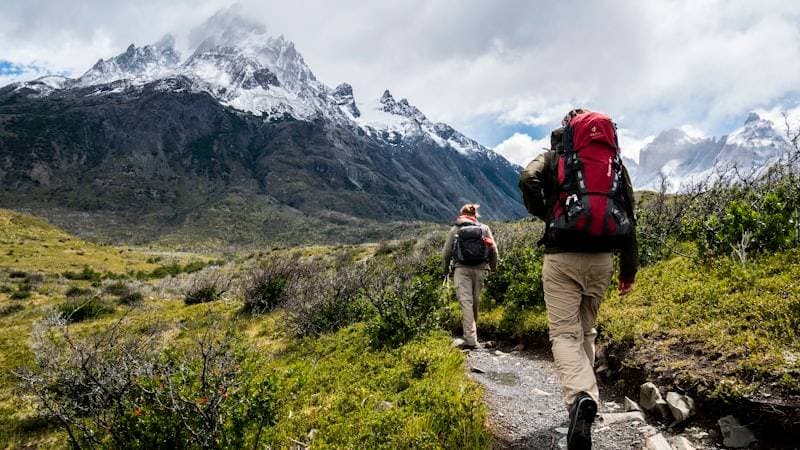
A 40-50L pack with a removable lid, ice axe loops, and crampon attachment points covers the full spectrum of alpine day objectives and lightweight overnights. Total pack weight should stay under 1.4kg. Look for a suspended mesh back panel for ventilation on warm approaches, and hip belt pockets large enough for a phone and energy gels. Compression straps are essential — they let you cinch the load tight against your back when the pack is half-empty on summit day, preventing dangerous shifting on exposed terrain.
Putting It All Together
Your complete starter kit — shell, insulation, baselayer, boots, and pack — should weigh under 5kg total. That leaves plenty of capacity for safety gear, nutrition, and navigation tools. Start with these five pillars, test them in progressively harder conditions, and upgrade individual pieces as you learn what matters most to your style of movement in the mountains.