The Trip That Broke Me (Then Made Me Better)
November. Olympic Coast. Three days, 22 miles. The forecast said "scattered showers." What we got was 48 straight hours of sustained rain — not drizzle, not mist, but genuine Pacific Northwest rain that falls in sheets and finds every weakness in your gear.
By the end of day one, my rain jacket had wet out from abrasion under my pack straps. By dinner, I couldn't get my stove lit because the piezo igniter on my pocket lighter had gotten wet. I crawled into my tent and discovered that the seam tape on the rainfly was peeling at a corner, and a slow drip was landing on my sleeping bag. I spent the night holding a bandana against the leak, wringing it out every 30 minutes, sleeping in 20-minute increments. The rain didn't stop until we were loading the car on day three.
That trip taught me more about rain camping than a decade of fair-weather hiking. Here's everything I learned, organized into gear strategies and mental strategies, because both matter equally.
Gear That Works in Rain (And Gear That Doesn't)
Your Tent Is Your Castle — Maintain It
The seam tape failure on the Olympic Coast was my fault. I'd owned that tent for two seasons and never re-sealed the seams. Factory seam sealing degrades after 1-2 years of regular use, especially if you store your tent slightly damp (which accelerates adhesive breakdown). Now I re-seal the fly and floor seams every spring with Gear Aid Seam Grip. It takes about an hour, costs $8, and prevents the kind of slow leak that turns a manageable rainy night into a miserable one.
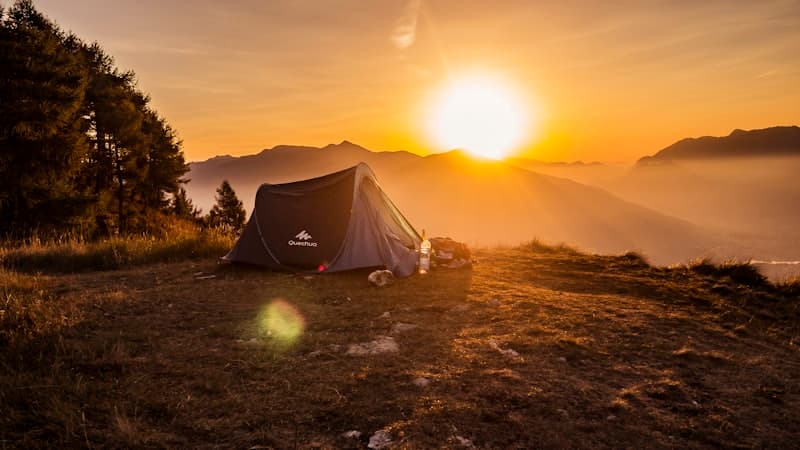
Tent selection matters too. My MSR Hubba Hubba NX 2 has a full-coverage fly that reaches nearly to the ground, creating protected vestibule space where I can store my pack and cook if wind conditions allow it. Some ultralight tents — particularly single-wall designs — sacrifice fly coverage for weight savings, which means rain splashes up from the ground and enters through the gap between the fly and the bathtub floor. In a light drizzle, this is fine. In a sustained downpour with wind, it means everything stored in the vestibule gets wet.
Pitch your tent with the smallest footprint facing the wind. The Hubba Hubba has a narrow end (the foot) and a wider end (the head). Orienting the narrow end into the prevailing wind reduces the surface area catching rain and wind, keeps the fly taut, and channels water off the fly more efficiently.
Site Selection Is Everything
In fair weather, I camp wherever looks nice. In rain, site selection is the most important decision of the day. Three rules:
Never camp in a depression. Low spots collect water. What looks like a flat, soft campsite in the afternoon becomes a puddle by midnight if it rains hard. I learned this on a trip in the Hoh Rainforest when I woke up at 2 AM to find a quarter inch of water under my tent floor. The bathtub floor held, but the ground beneath my sleeping pad was saturated and I could feel the cold seeping through.
Look for slightly elevated ground with a slight slope. You want water to sheet off, not pool. A 2-3 degree slope is ideal — enough to drain water without you sliding downhill in your sleep. If you can find a spot under a large tree canopy (but not directly under a dead branch — widow-makers are real), the tree cover breaks up the rain before it hits your tent and reduces the drumming noise significantly.
Think about morning sun. If there's any chance of clearing by morning, camp on an east-facing slope or clearing. The morning sun will dry your tent and gear faster than an hour of breeze. I've cut my pack-up time in half by camping where the first sunlight hits, because I'm packing a dry tent instead of a wet one.
Keep Your Sleep System Dry — Everything Else Is Negotiable
Here's the hierarchy of what must stay dry on a rainy trip: your sleeping bag and the clothes you sleep in. Everything else — hiking clothes, rain jacket, the tent itself — can be wet and you'll be fine. But a wet sleeping bag in cold, rainy conditions is a genuine emergency. Down loses most of its insulating value when wet, and even synthetic bags perform poorly when saturated.
I pack my sleeping bag in a dry bag inside my pack, which is itself lined with a trash compactor bag (not a regular trash bag — compactor bags are thicker and don't puncture as easily). My sleep clothes (Smartwool 250 merino top and a dry pair of socks) go in a separate small dry bag. These items never come out until I'm inside the tent with the fly zipped. No exceptions, even if I "think" the rain has stopped. Pacific Northwest rain restarts without warning.
Wet Clothes: Embrace It
On a multi-day rain trip, your hiking clothes will be wet. Accept this. Fighting it wastes energy and morale. I hike in synthetic clothes (Capilene Cool Daily top, synthetic running shorts) specifically because they retain warmth when wet and dry fast when given a chance. Cotton is hypothermia fuel in the rain — the old saying "cotton kills" is not an exaggeration.
At camp, I change out of wet hiking clothes and into dry sleep clothes immediately. The wet stuff goes under the tent vestibule or hung from a guy line. In the morning, I put the wet clothes back on — which is psychologically miserable for the first 90 seconds and then completely fine once my body heats them up. Trying to dry wet clothes overnight in a humid tent is futile. Just accept the morning discomfort. It passes.
Cooking in the Rain
Rain and stoves are a frustrating combination. I've switched from a piezo lighter to a mini Bic with a piece of duct tape wrapped around the striker wheel — the tape keeps moisture off the flint. I also carry a few cotton balls coated in Vaseline as fire starter backup, sealed in a small Ziploc.
I cook in my tent vestibule when conditions force it. Before anyone emails me about how dangerous this is: yes, I know. Cooking in an enclosed space with a stove creates carbon monoxide and fire risk. I mitigate this by leaving the vestibule wide open on the leeward side, using the stove only for boiling water (no simmering, no frying), and keeping the stove on a flat, stable surface away from the tent fabric. This is a calculated risk I take in genuinely bad conditions when cooking in the open rain means no hot food. If you're not comfortable with it, eat cold food — tortilla wraps and nut butter don't require a stove and there's no shame in a cold dinner when it's pouring.
The Mental Game
Lower Your Expectations
The worst rain camping experiences come from expecting a rain trip to feel like a dry trip. It won't. You'll be slower. You'll be less comfortable. Views will be socked in. Everything takes longer — setting up camp, cooking, packing up. Accept this before you leave the trailhead, and the experience shifts from "this is miserable" to "this is just different."
I've had some of my most memorable nights in the backcountry during rainstorms. There's something deeply primal about lying in a dry tent while rain hammers the fly, hearing the forest drip, knowing that your gear is working and you're warm and fed. Fair-weather camping is pleasant. Rain camping is character-building, and on the best nights, it's surprisingly peaceful.
Routine Is Your Anchor
When everything is wet and cold and annoying, routine keeps you functional. I have a rain-camp routine that I follow without thinking: set up tent first, throw sleeping bag inside, change into dry clothes, hang wet clothes in vestibule, boil water, eat, brush teeth, get in bag. Every step is automatic. There's no standing in the rain trying to decide what to do next. Indecision in the rain is how you get cold.
Know When to Bail
Toughing it out in rain is a valid approach — but so is going home. If conditions deteriorate beyond what your gear can handle, or if someone in your group is showing signs of hypothermia (uncontrollable shivering, confusion, loss of coordination), leaving the backcountry is not a failure. It's the right call. I've cut trips short twice because conditions went beyond what was fun or safe. Both times I was glad I did.
The backcountry will be there next weekend. There's no trail that's worth a medical emergency.
The Gear I'd Add for Rain-Heavy Trips
Beyond my normal packing list, here's what I add when rain is likely:
Extra pair of socks — because dry feet at camp prevent blisters from forming overnight. Darn Tough merino, stored in a Ziploc.
Camp towel — a small PackTowl (1 oz) for wiping condensation off the tent interior in the morning and drying my hands before handling the sleeping bag.
Extra Ziploc bags — for keeping phone, wallet, and other moisture-sensitive items dry. I also use a quart-sized bag over the opening of my pack when it's pouring, as extra insurance beyond the trash compactor liner.
Seam sealer — a small tube of Gear Aid Seam Grip in case I discover a leak mid-trip. It cures overnight and has saved me from an expanding leak on more than one occasion.
Total added weight: about 4 oz. Worth every gram when the sky opens up.