The Gear List Nobody Shows You
Every thru-hiking gear list online is written before the hike. Clean, optimized, aspirational. But thru-hikes change gear lists. Items get mailed home from the first trail town. New items get added after the first rainstorm, the first snow crossing, the first night below 20 degrees. The gear list at mile 2,650 looks nothing like the gear list at mile 0.
I spent time at trail towns along the PCT last summer — Kennedy Meadows, Mammoth Lakes, South Lake Tahoe, Cascade Locks — talking to thru-hikers about their gear. Not what they planned to carry, but what they were actually carrying right then, and what they'd changed along the way. I also did a 250-mile section from Kennedy Meadows to Mammoth, which gave me my own perspective on what works and what doesn't for high-mile days in the Sierra.
What follows is a composite gear list based on those conversations and my own experience — the items that showed up in nearly every hiker's pack, the common weights, and the items that got sent home most often.
The Big Three: Shelter, Sleep, Pack
Shelter — Average: 1 lb 8 oz to 2 lbs 4 oz
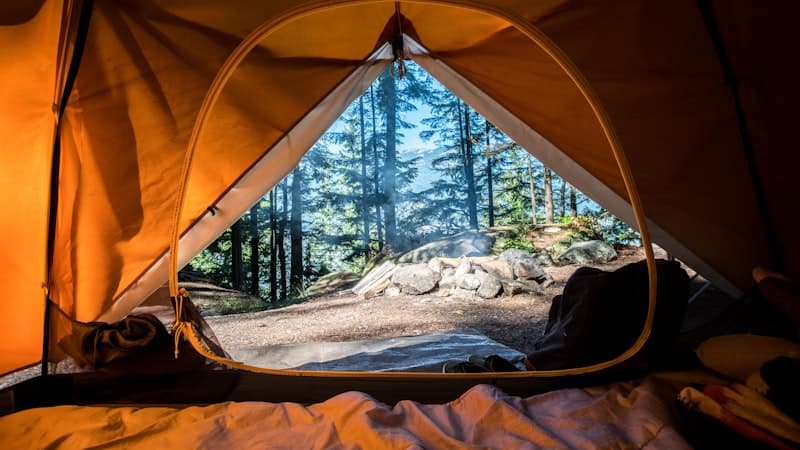
The most popular shelter among the hikers I talked to was the Zpacks Duplex (1 lb 3 oz), followed closely by the Durston X-Mid 2P (2 lbs 2 oz) and various tarp/bivy combinations. The Durston was the value pick — at $300 versus the Duplex's $700, it offered comparable livability at a modest weight penalty. Several hikers had started with the Duplex and were nursing small tears in the DCF fabric by NorCal, while the Durston's silnylon was holding up with fewer issues.
Two hikers had started with the MSR Hubba Hubba NX 2 and both had mailed it home by Kennedy Meadows, switching to lighter options. "It's a great weekend tent," one of them told me, "but carrying an extra pound of shelter for 2,650 miles is 2,650 miles of extra weight." Fair point. On a thru-hike, ounces that are tolerable for a weekend become unacceptable over months.
Three hikers carried tarp-and-bivy setups weighing under 1 pound total. All three were experienced long-distance hikers. All three acknowledged that tarps require more skill and offer less protection than enclosed shelters. "I wouldn't recommend it for a first thru-hike," one said. "You need to know how to read weather and pick campsites."
Sleep System — Average: 1 lb 8 oz to 2 lbs 2 oz
Quilts dominated. Out of twelve hikers, eight used quilts and four used mummy bags. The Enlightened Equipment Enigma 20 (1 lb 5 oz) was the most common quilt, followed by Katabatic Gear Palisade 15 (1 lb 9 oz) for hikers who expected colder conditions in Washington. The mummy bag users carried either the Western Mountaineering UltraLite (1 lb 14 oz) or the Feathered Friends Tanager 20 (1 lb 10 oz).
Sleeping pads were almost universally the Therm-a-Rest NeoAir XLite (12 oz) or the newer NeoAir XTherm (15 oz) for hikers hitting Washington in late September when ground temps drop. One hiker used a Nemo Tensor Insulated and liked the quieter fabric (the NeoAir XLite's crinkly noise is a common complaint). Two ultralight hikers used the Therm-a-Rest Uberlite (8.8 oz) but both expressed concern about its puncture resistance on rocky ground.
Pack — Average: 1 lb 8 oz to 2 lbs 10 oz
The ULA Circuit (2 lbs 5 oz) was the most popular pack, used by four of twelve hikers. Its 68-liter capacity handles the longer food carries in the Sierra (Kennedy Meadows to Mammoth is 8 days for most hikers) while staying under 2.5 pounds. The Gossamer Gear Mariposa (1 lb 9 oz) was used by three hikers, all with base weights under 9 pounds. Two hikers carried the Granite Gear Crown2 (2 lbs 5 oz), which was the budget pick at around $160.
Nobody was carrying a traditional heavy pack like an Osprey Atmos AG 65 or Gregory Baltoro — which doesn't mean they're bad packs, just that thru-hikers optimize for weight over features. Several hikers mentioned starting with heavier packs and switching to ULA or Gossamer Gear during their first resupply.
Clothing
What Everyone Carried
Rain jacket: Almost universally a Frogg Toggs UltraLite2 (5.5 oz, $25) or a Patagonia Torrentshell 3L (14 oz, $179). Frogg Toggs won the weight battle; the Torrentshell won the durability battle. Multiple hikers were on their second or third pair of Frogg Toggs — the fabric tears easily on brush and pack straps. But at $25 a pop, nobody minded replacing them.
Insulation: The Patagonia Nano Puff (12 oz) was the most common, followed by the Patagonia Micro Puff (8.5 oz) for weight-conscious hikers and various down jackets in the 8-12 oz range. One hiker carried a Montbell Plasma 1000 Alpine Down Parka at 4.6 oz, which is the lightest insulated jacket I've ever seen in person. He slept in it every night and wore it at every rest stop.
Base layers: Split between Patagonia Capilene Cool Daily (synthetic, fast-drying, $49) for hot sections and a merino long-sleeve (various brands) for cold sections. Several hikers mailed their base layers between trail towns — synthetic heading into the desert, merino heading into the Sierra and Washington.
Hiking clothes: Running shorts + synthetic t-shirt was nearly universal. One hiker wore the same pair of running shorts for the entire trail, washing them at every town stop. "They're indestructible," he said. They were also, objectively, destroyed.
What Got Sent Home
The most commonly ditched items across the hikers I surveyed: extra clothing (second pair of hiking socks, camp pants, fleece that duplicated the puffy's function), camp shoes (most switched to just wearing sleep socks at camp), and heavy rain pants. Three hikers started with rain pants and none still had them. "If it's warm enough to rain, I don't need rain pants. I just get wet and dry out," one explained. In the Sierra above treeline, wind pants (1-2 oz) replaced rain pants for most hikers — lighter, more breathable, and sufficient for blocking wind and light precip above 10,000 feet.
Kitchen and Water
Every hiker carried some version of the BRS-3000T stove ($20, 0.9 oz) or a Soto Windmaster ($65, 2.3 oz). The Soto was preferred by hikers who cooked in windy conditions regularly — the regulated output performs better in cold and wind than the BRS's unregulated flame. Two hikers went stoveless for portions of the trail and said they'd never do it again. "Cold-soaking is fine for 3 days. For 5 months, you need hot food for morale."
Water treatment was the Sawyer Squeeze (3 oz, $35) for ten of twelve hikers, with Aquamira drops as a backup for most. The two exceptions used the Katadyn BeFree for its faster flow rate. One Sawyer user switched to BeFree mid-trail after getting frustrated with the Sawyer's declining flow rate and forgetting to backflush regularly.
Cookpots were either the Toaks 750ml titanium (3.3 oz) or a simple DIY aluminum can setup (1 oz). Sporks were titanium, long-handled, universally the same $15 item from Amazon that's been the default for a decade.
Electronics and Navigation
Phone: Everyone carried a smartphone with Gaia GPS or FarOut (formerly Halfmile/Guthook) for navigation. FarOut's water source comments were described as "the most important feature on the entire trail" by multiple hikers, especially through the water-scarce Southern California sections.
Battery bank: The Nitecore NB10000 (5.3 oz, 10,000 mAh) was the most popular, providing 3-4 full phone charges. Two hikers carried 20,000 mAh banks for the longer stretches without resupply in the Sierra — heavy (12 oz) but worth it when you're 8 days between outlets.
Satellite communicator: Nine of twelve hikers carried either a Garmin inReach Mini 2 (3.5 oz) or an Apple Watch Ultra with satellite SOS. The inReach was preferred for its two-way messaging and weather forecasts. The hikers without a satellite communicator acknowledged the risk and said they'd carry one on a future thru-hike. "Crossing Forester Pass solo in a whiteout made me reconsider," one said.
Total Base Weights
Across the twelve hikers I surveyed, base weights ranged from 7.2 lbs to 14.8 lbs, with a median of 10.4 lbs. The lightest hiker was a 52-year-old on his third PCT who had optimized every gram over thousands of trail miles. The heaviest was a first-time thru-hiker carrying what he described as "everything my anxiety told me I might need." By NorCal, he was down to 11 lbs.
The sweet spot seems to be 10-12 lbs base weight. Below 10 lbs, you're making genuine comfort sacrifices (thinner pad, smaller shelter, fewer clothing options). Above 12 lbs, you're likely carrying items that could be lighter or left home. At 10-12 lbs, most hikers were comfortable, safe, and not obsessing over grams — which is the mental freedom that ultralight philosophy is supposed to deliver.
The Most Overrated and Underrated Gear
Most overrated: Camp shoes. Eleven of twelve hikers started with camp shoes (Crocs, flip flops, water shoes). By mid-trail, only three still carried them. The weight-to-comfort ratio doesn't justify 6-10 oz when you're chasing big-mile days and your sleep socks provide enough camp comfort.
Most underrated: A good pillow. The Sea to Summit Aeros Ultralight (2.5 oz) was carried by eight hikers, and all of them called it essential. "Sleep quality is everything on trail," one hiker told me. "A real pillow versus a stuffed jacket is the difference between waking up functional and waking up wrecked." I couldn't agree more — it's the best 2.5 ounces in any backpacking kit.